


Crivian 2
Add a review FollowOverview
-
Founded Date September 11, 1961
-
Sectors English
-
Posted Jobs 0
-
Viewed 11
Company Description
DeepSeek’s Popular aI App is Explicitly Sending uS Data To China

The United States’ current regulative action versus the Chinese-owned social video platform TikTok triggered mass migration to another Chinese app, the social platform “Rednote.” Now, a generative expert system platform from the Chinese designer DeepSeek is exploding in popularity, posturing a potential threat to US AI dominance and providing the current evidence that moratoriums like the TikTok restriction will not stop Americans from utilizing Chinese-owned digital services.

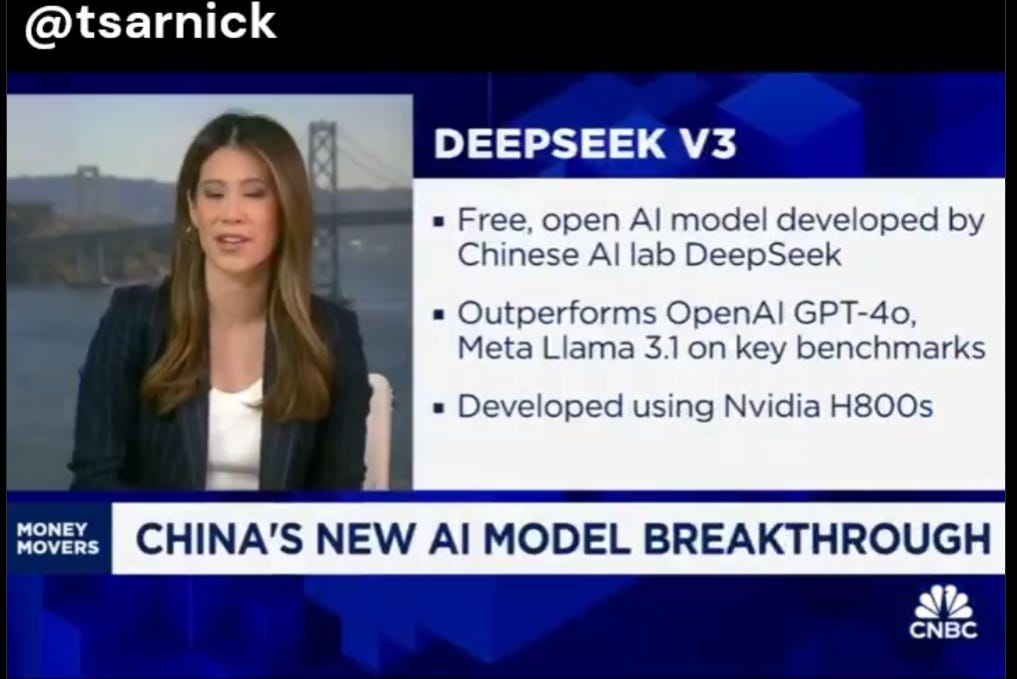
DeepSeek, an AI research study lab developed by a popular Chinese hedge fund, just recently gained popularity after launching its newest open source generative AI model that easily takes on top US platforms like those by OpenAI. However, to assist avoid US sanctions on software and hardware, DeepSeek developed some creative workarounds when constructing its designs. On Monday, DeepSeek’s developers restricted new sign-ups after declaring the app had actually been overrun with a “massive destructive attack.”
While DeepSeek has several AI models, a few of which can be downloaded and run locally on your laptop computer, the bulk of people will likely access the service through its iOS or Android apps or its web chat interface. Like with other generative AI designs, you can ask it questions and get the answer; it can browse the web; or it can alternatively utilize a thinking model to elaborate on answers.
DeepSeek, which does not appear to have established a communications department or press contact yet, did not return an ask for comment from WIRED about its user data securities and the degree to which it focuses on information personal privacy initiatives.
As individuals demand to evaluate out the AI platform, though, the need brings into focus how the Chinese start-up collects user data and sends it home. Users have currently reported numerous examples of DeepSeek censoring material that is vital of China or its policies. The AI setup appears to gather a great deal of information-including all your chat messages-and send it back to China. In many methods, it’s most likely sending out more data back to China than TikTok has in current years, given that the social networks company moved to US cloud hosting to attempt to deflect US security concerns
“It shouldn’t take a panic over Chinese AI to remind people that a lot of business in business set the terms for how they use your private information” states John Scott-Railton, a senior scientist at the University of Toronto’s Citizen Lab. “Which when you utilize their services, you’re doing work for them, not the other method around.”
What DeepSeek Collects About You
To be clear, DeepSeek is sending your data to China. The English-language DeepSeek personal privacy policy, which lays out how the company handles user data, is indisputable: “We save the details we gather in safe servers located in the People’s Republic of China.”
Simply put, all the discussions and concerns you send to DeepSeek, along with the responses that it generates, are being sent to China or can be. DeepSeek’s personal privacy policies likewise detail the information it gathers about you, which falls into 3 sweeping categories: info that you share with DeepSeek, information that it instantly collects, and info that it can obtain from other sources.
The very first of these areas consists of “user input,” a broad classification likely to cover your chats with DeepSeek by means of its app or site. “We may gather your text or audio input, prompt, uploaded files, feedback, chat history, or other material that you offer to our design and Services,” the personal privacy policy states. Within DeepSeek’s settings, it is possible to delete your chat history. On mobile, go to the left-hand navigation bar, tap your account name at the bottom of the menu to open settings, and then click “Delete all chats.”
This collection is comparable to that of other generative AI platforms that take in user prompts to address questions. OpenAI’s ChatGPT, for example, has been slammed for its information collection although the company has actually increased the methods information can be erased with time. Regardless of these kinds of protections, personal privacy advocates stress that you must not reveal any sensitive or personal info to AI chat bots.

“I would not input personal or personal information in any such an AI assistant,” says Lukasz Olejnik, independent scientist and expert, associated with King’s College London Institute for AI. Olejnik notes, however, that if you install models like DeepSeek’s in your area and run them on your computer, you can communicate with them independently without your data going to the company that made them. Additionally, AI search business Perplexity says it has added DeepSeek to its platforms but declares it is hosting the design in US and EU information centers.
Other individual info that goes to DeepSeek consists of data that you utilize to set up your account, including your e-mail address, contact number, date of birth, username, and more. Likewise, if you connect with the company, you’ll be sharing information with it.
Bart Willemsen, a VP expert concentrating on worldwide personal privacy at Gartner, states that, usually, the building and construction and operations of generative AI models is not transparent to consumers and other groups. People do not know exactly how they work or the exact information they have actually been built on. For individuals, DeepSeek is mainly complimentary, although it has expenses for developers using its APIs. “So what do we pay with? What do we normally pay with: data, understanding, content, details,” Willemsen says.
As with all digital platforms-from sites to apps-there can likewise be a big quantity of data that is gathered instantly and silently when you utilize the services. DeepSeek states it will collect details about what device you are utilizing, your operating system, IP address, and details such as crash reports. It can likewise tape-record your “keystroke patterns or rhythms,” a type of data more extensively collected in software constructed for character-based languages. Additionally, if you buy DeepSeek’s premium services, the platform will gather that information. It also uses cookies and other tracking innovation to “measure and examine how you utilize our services.”
A WIRED evaluation of the DeepSeek website’s underlying activity reveals the company likewise appears to send out data to Baidu Tongji, Chinese tech giant Baidu’s popular web analytics tool, along with Volces, a Chinese cloud infrastructure company. In a social networks post, Sean O’Brien, creator of Yale Law School’s Privacy Lab, stated that DeepSeek is likewise sending “basic” network information and “gadget profile” to TikTok owner ByteDance “and its intermediaries.
The final category of info DeepSeek reserves the right to gather is information from other sources. If you develop a DeepSeek account using Google or Apple sign-on, for example, it will receive some information from those business. Advertisers likewise share info with DeepSeek, its policies say, and this can consist of “mobile identifiers for marketing, hashed e-mail addresses and phone numbers, and cookie identifiers, which we use to help match you and your actions outside of the service.”
How DeepSeek Uses Information
Huge volumes of data may stream to China from DeepSeek’s worldwide user base, however the business still has power over how it utilizes the information. DeepSeek’s personal privacy policy says the business will use information in lots of typical methods, consisting of keeping its service running, imposing its conditions, and making enhancements.
Crucially, however, the company’s personal privacy policy recommends that it may harness user triggers in establishing new models. The business will “examine, enhance, and establish the service, consisting of by monitoring interactions and use throughout your devices, examining how individuals are utilizing it, and by training and enhancing our innovation,” its policies say.
DeepSeek’s privacy policy also states the business will likewise utilize info to “comply with [its] legal obligations”-a blanket provision many companies consist of in their policies. DeepSeek’s personal privacy policy says information can be accessed by its “corporate group,” and it will share info with police, public authorities, and more when it is required to do so.
While all business have legal commitments, those based in China do have notable responsibilities. Over the past decade, Chinese officials have passed a series of cybersecurity and personal privacy laws indicated to permit state authorities to demand data from tech companies. One 2017 law, for circumstances, states that organizations and people need to “cooperate with national intelligence efforts.”
These laws, along with growing trade tensions in between the US and China and other geopolitical elements, sustained security worries about TikTok. The app could collect big quantities of data and send it back to China, those in favor of the TikTok restriction argued, and the app could also be used to press Chinese propaganda. (TikTok has actually rejected sending out US user information to China’s government.) Meanwhile, several DeepSeek users have currently mentioned that the platform does not supply responses for questions about the 1989 Tiananmen Square massacre, and it addresses some questions in ways that seem like propaganda.
Willemsen states that, compared to users on a social media platform like TikTok, individuals messaging with a generative AI system are more actively engaged and the material can feel more personal. In other words, any impact could be bigger. “Risks of subliminal content change, discussion direction steering, in active engagement ought by that logic to lead to more concern, not less,” he states, “especially offered how the inner functions of the model are commonly unidentified, its thresholds, borders, controls, censorship rules, and intent/personae mainly left unscrutinized, and it being currently so popular in its infancy stage.”
Olejnik, of King’s College London, says that while the TikTok restriction was a particular circumstance, US law makers or those in other nations might act again on a comparable premise. “We can’t dismiss that 2025 will bring a growth: direct action versus AI firms,” Olejnik states. “Of course, data collection might once again be named as the reason.”
Updated 5:27 pm EST, January 27, 2025: Added extra details about the DeepSeek site’s activity.
Updated 10:05 am EST, January 29, 2025: Added additional information about DeepSeek’s network activity.
In your inbox: WIRED’s most ambitious, future-defining stories
Hey, maybe it’s time to erase some old chat histories
Big Story: The magnificent burnout of a photovoltaic panel salesman
Temu’s takeover is now total
The cash Money Money concern: Rich males rule the world